
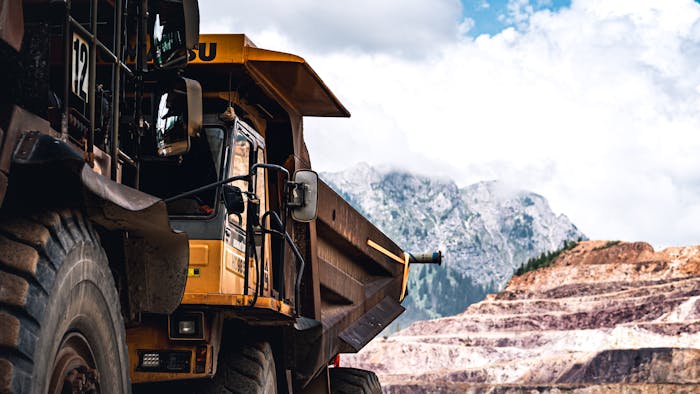
The African continent holds some of the world’s richest mineral reserves. From gold, copper, and diamonds to lithium, cobalt, and rare earth elements that are driving the global energy transition. However, despite this wealth of opportunity, many mining projects across Africa struggle to attract and retain investor confidence.
While most investors recognise Africa’s mineral potential, they are equally aware of the significant risks that accompany operations on the continent. These range from political instability and regulatory uncertainty to infrastructure deficits, environmental challenges, and skills shortages. For mining companies, addressing these risks proactively is critical not only to securing funding but also to ensuring project longevity and sustainability.
At CA Mining, our work with both investors and mining operators across Africa gives us unique insight into how risk perception influences investment decisions and how strategic recruitment and leadership talent can mitigate these risks.
Below, we explore some of the key factors that continue to make investors cautious about certain mining projects in Africa.
1. Political and Regulatory Instability
Political risk remains one of the most significant deterrents to mining investment in Africa. Frequent policy changes, shifting taxation regimes, and contract renegotiations often create an unpredictable environment for investors seeking long-term returns.
Some countries have made commendable progress in creating stable mining codes, but in others, sudden changes in legislation or the introduction of resource nationalism can lead to uncertainty. For example, revisions to mining laws that alter royalty rates, increase local ownership requirements, or revoke existing licences can immediately disrupt investor confidence.
Investors want assurance that their capital and operations are protected under a consistent legal framework. When governments fail to provide that predictability, projects are viewed as high-risk, no matter how rich the underlying resource may be.
Transparent communication between governments, mining companies, and investors, combined with local partnerships and strong in-country leadership, can ease these fears. Mining firms that hire compliance-focused executives, legal advisors, and country managers with regional expertise are better equipped to navigate these shifting landscapes.
2. Infrastructure Deficits and Logistical Challenges
Even when political conditions are stable, mining projects in Africa often face severe infrastructure challenges. Many deposits are located in remote areas with limited access to roads, rail, ports, or power supply.
Without reliable infrastructure, project costs rise exponentially. Transporting heavy machinery, fuel, and raw materials to and from the mine site becomes both time-consuming and expensive. In some cases, mining companies have to build their own supporting infrastructure such as power plants, water facilities, or access roads before extraction can even begin.
For investors, these additional costs and delays can make a project financially unattractive, particularly in early development stages.
Investors are increasingly looking for projects that integrate infrastructure solutions from the outset or that partner with governments and development agencies to share the cost burden. Hiring experienced project managers and engineers who can design efficient logistics networks and oversee capital-intensive builds is vital.
3. Environmental, Social and Governance (ESG) Concerns
ESG factors have become central to mining investment decisions globally, and Africa is no exception. Environmental mismanagement, community displacement, and human rights issues can cause reputational and financial damage; risks that investors are increasingly unwilling to take.
Investors now demand evidence of responsible mining practices, including water conservation, waste management, biodiversity protection, and community engagement. Failure to meet ESG expectations can result in funding withdrawals or exclusion from institutional investment portfolios.
Moreover, environmental activism and community resistance can lead to project delays, legal challenges, or outright cancellations. These risks are especially prevalent in regions where local communities are not adequately consulted or compensated.
The appointment of dedicated sustainability officers, community relations managers, and ESG specialists has become essential. By embedding ESG leadership into their project teams, mining companies can build trust with communities and investors alike, ensuring that projects meet global standards while supporting local development.
4. Security and Safety Risks
In certain African regions, mining operations face risks from armed conflict, illegal mining, and theft of resources. Security threats can range from local unrest and artisanal mining encroachment to organised crime targeting transport routes and equipment.
Beyond the physical security of assets, worker safety remains a major concern. Inadequate safety standards or lack of training can lead to workplace accidents, fatalities, and production halts, all of which reflect poorly on company management and deter investors.
Companies that prioritise risk assessment, security planning, and health and safety training not only protect their workforce but also demonstrate reliability to investors. Recruiting experienced health, safety, and security (HSS) professionals with a background in high-risk environments is a proactive step in reducing these threats.
5. Skills Shortages and Talent Gaps
Mining projects are complex, multidisciplinary operations requiring technical, managerial, and strategic expertise. Across Africa, a shortage of experienced local professionals continues to challenge mining companies; particularly in specialised fields like geotechnical engineering, metallurgy, environmental science, and mine planning.
Without the right talent in place, projects face operational inefficiencies, compliance risks, and delays in achieving production targets. Investors recognise that a project’s success is only as strong as the leadership and workforce driving it.
Partnering with recruitment specialists such as CA Mining allows companies to access a deep network of skilled mining professionals across Africa and beyond. We specialise in sourcing talent that combines technical knowledge with regional insight; ensuring that operations are guided by capable, culturally aware leaders who can navigate local challenges effectively.
6. Financing Constraints and Market Volatility
The cyclical nature of commodity prices adds another layer of uncertainty to African mining projects. Price drops in metals such as copper, gold, or cobalt can rapidly change the financial feasibility of a project.
For investors, volatility in global markets means that timing and project economics are critical. A project that looks profitable at $9,000 per tonne of copper may become unsustainable if prices fall below $7,000.
Coupled with Africa’s high-risk profile, this volatility often leads to higher capital costs or reluctance among traditional lenders to finance early-stage exploration.
Companies that maintain flexible financial structures, diversify their commodity portfolios, and invest in feasibility studies are better positioned to attract long-term investment. Experienced CFOs, financial analysts, and investor relations professionals play a pivotal role in maintaining transparency and stability during market fluctuations.
7. Legal and Ownership Disputes
Disputes over land rights, community ownership, and overlapping mining licences are common across African jurisdictions. Inadequate documentation, historical claims, or inconsistent application of laws can lead to costly legal battles that halt production and scare off investors.
Ownership disputes can also arise between joint venture partners, particularly in cases where expectations or governance structures are not clearly defined.
Investors are increasingly drawn to companies with strong governance frameworks and robust legal due diligence processes. Appointing legal counsel and contract specialists with a proven track record in African mining jurisdictions helps reduce exposure to these risks.
Restoring Investor Confidence
While these risks are real, they are not insurmountable. The success of mining projects in Africa often hinges on the quality of the people behind them. Strategic leadership, operational expertise, and cultural understanding are critical components in mitigating risk and reassuring investors.
At CA Mining, we understand that the right talent can transform perceived risks into opportunities. Our executive search and recruitment solutions connect mining companies with professionals who bring both technical acumen and local market intelligence. Whether it’s securing a General Manager with decades of in-country experience or sourcing ESG and finance experts who align with investor expectations, we help build teams that inspire confidence and drive success.
Africa’s mining potential is immense and so are the complexities that come with developing projects across diverse political, social, and geographical landscapes. For investors, understanding and managing these risks is key to unlocking the continent’s wealth of opportunity.
With the right governance structures, strategic partnerships, and above all, the right people, mining companies can transform investor hesitation into long-term commitment.
At CA Mining, we bridge that gap. By connecting our clients with top-tier mining professionals who understand Africa’s challenges and possibilities, we help ensure that mining projects are not just investor-ready, but investor-confident.
